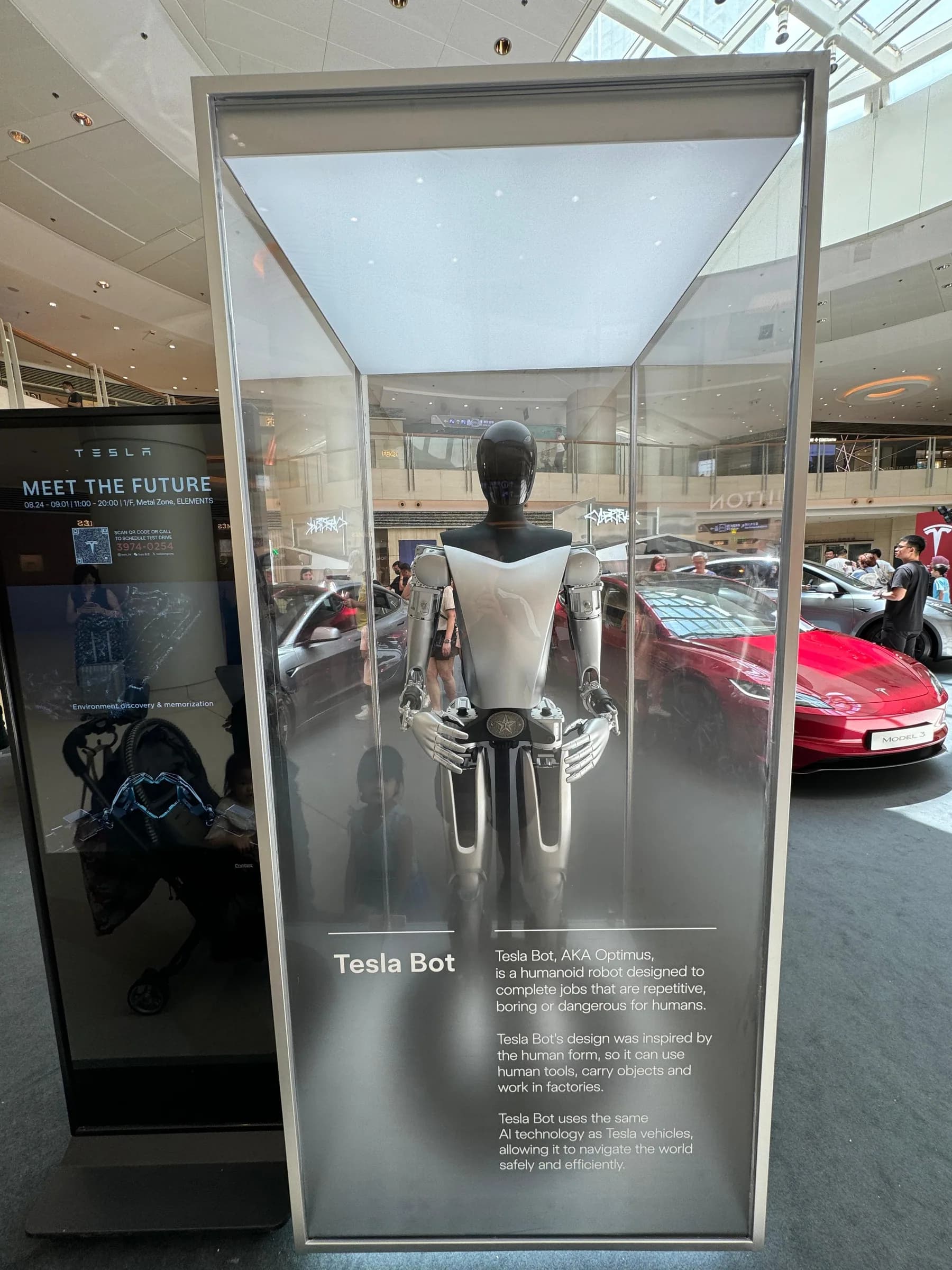
Public demo
Tesla
Optimus Gen 2
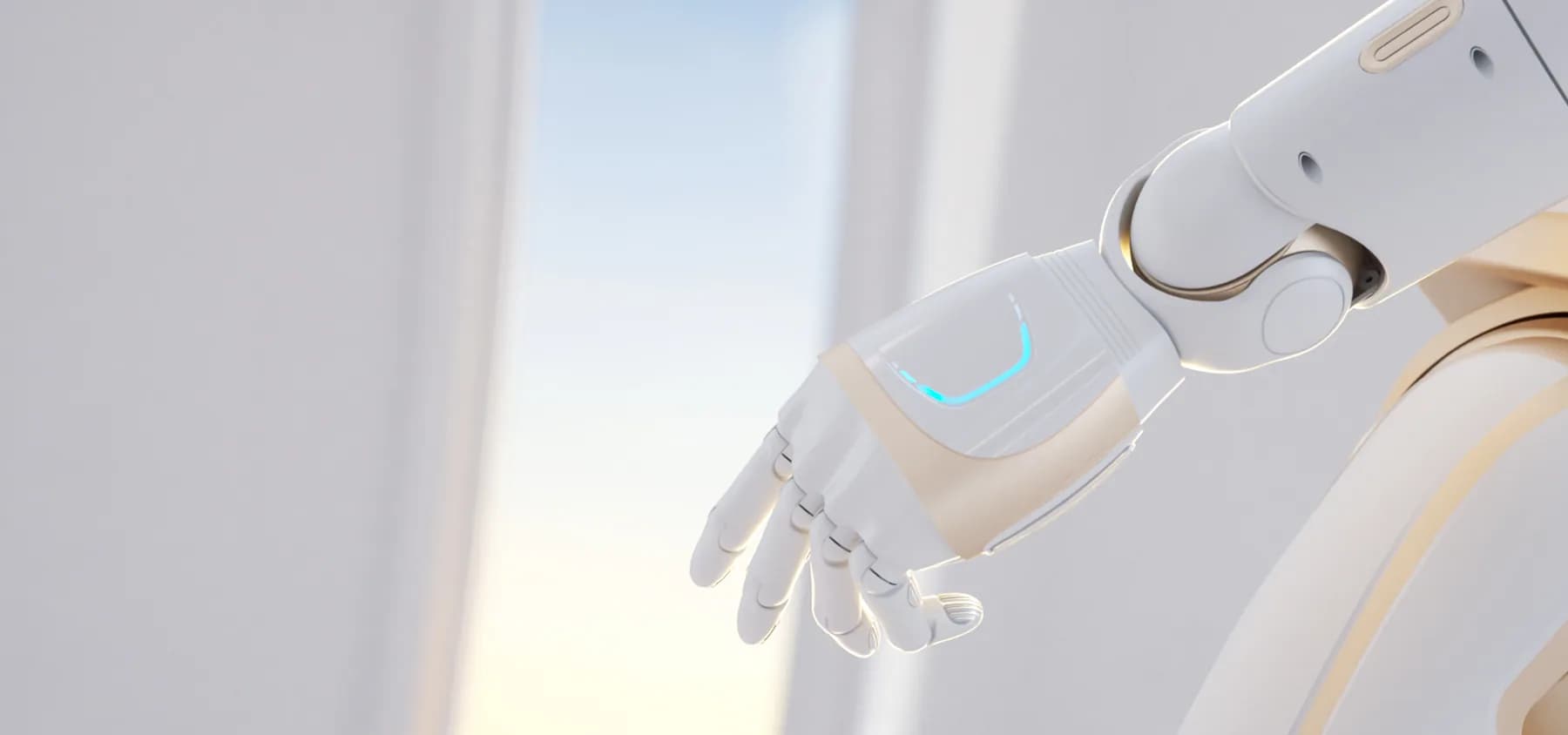
Optimus Gen 2 was unveiled by Musk in a demo video on X on December 12, 2023, and is the second generation of…
Height173 cm
Degrees of freedom28
Arm payload—
Research
Price on request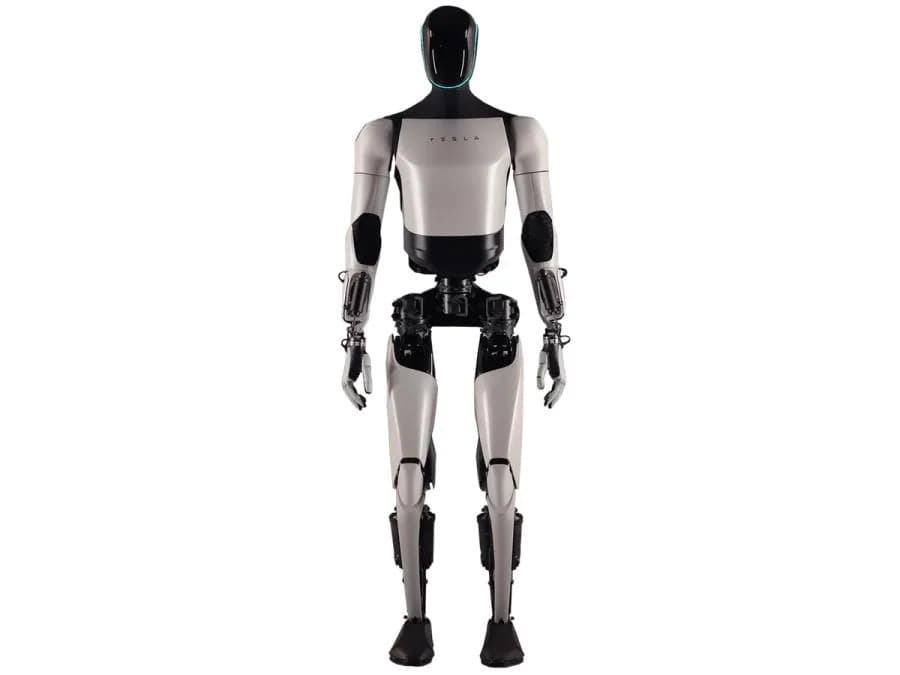
Optimus is the humanoid robot program Tesla first announced at AI Day in August 2021, then known as the Tesla Bot concept.
Optimus is the humanoid robot program Tesla first announced at AI Day in August 2021 (the Tesla Bot concept). On September 30, 2022 (October 1 Beijing time), at the second AI Day, the first prototype capable of walking independently — codenamed Bumblebee — made its official debut: about 1.72–1.73 m tall, 73 kg, with 28 actuators across the body (6 designs, 3 rotary and 3 linear), 11 degrees of freedom per hand, a 2.3 kWh battery and the FSD pure-vision compute approach. On stage the prototype waved and walked slowly.
The concept specifications announced in 2021 were: 5 ft 8 in (about 173 cm) tall, 57 kg, a 45 lb (about 20 kg) payload, a top speed of 5 mph (about 8 km/h) and 40 actuators across the body. The actual prototype weighed 73 kg (over the concept target), and media measurements put its carrying capacity at about 10 kg.
Optimus's technical approach centers on transferring Tesla's FSD vision neural network and Dojo supercomputer training stack from autonomous driving to a humanoid robot: camera input and end-to-end neural network output of control signals, without relying on high-definition maps or LiDAR. Musk has claimed a mass-production target price below US$20,000 and said the humanoid robot business will matter more than the car business. An updated version in March 2023 achieved upright walking and grasping, and was later superseded by Gen 2, released in December 2023.
| Height | 173 cm |
|---|---|
| Weight | 73 kg |
| Form factor | Full-size |
| Locomotion | Bipedal |
|---|---|
| Degrees of freedom | 28 |
| Actuators | 28 custom actuators in 6 designs (3 rotary and 3 linear actuators, including harmonic reducers and planetary roller screws), reusing design experience from automotive powertrains |
| Compute | Tesla FSD computer (pure-vision end-to-end neural network, sharing its lineage with autonomous driving) |
|---|---|
| Hands | Five-fingered dexterous hands, about 11 DOF per hand (6 actuators), tendon-driven for near-human dexterity |
| Availability | Not for sale |
|---|---|
| Software / OS | Tesla FSD-derived autonomy stack |
| Deployments & partners | Internal development; no external deployment |
Claims on this profile are linked to primary reporting and manufacturer material where available.
Specifications are sourced from public materials and may change. Always confirm commercial terms with the manufacturer.
Optimus Gen 2 was unveiled by Musk in a demo video on X on December 12, 2023, and is the second generation of…
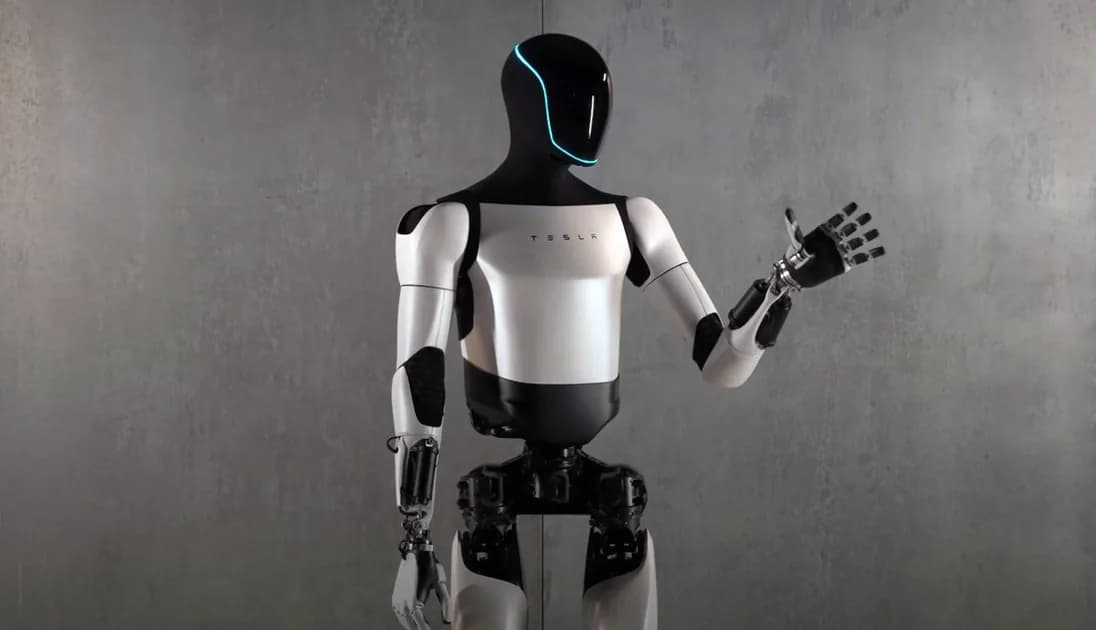
Tesla's third-generation humanoid, unveiled at the Q3 2025 earnings call and entering production at Fremont in…
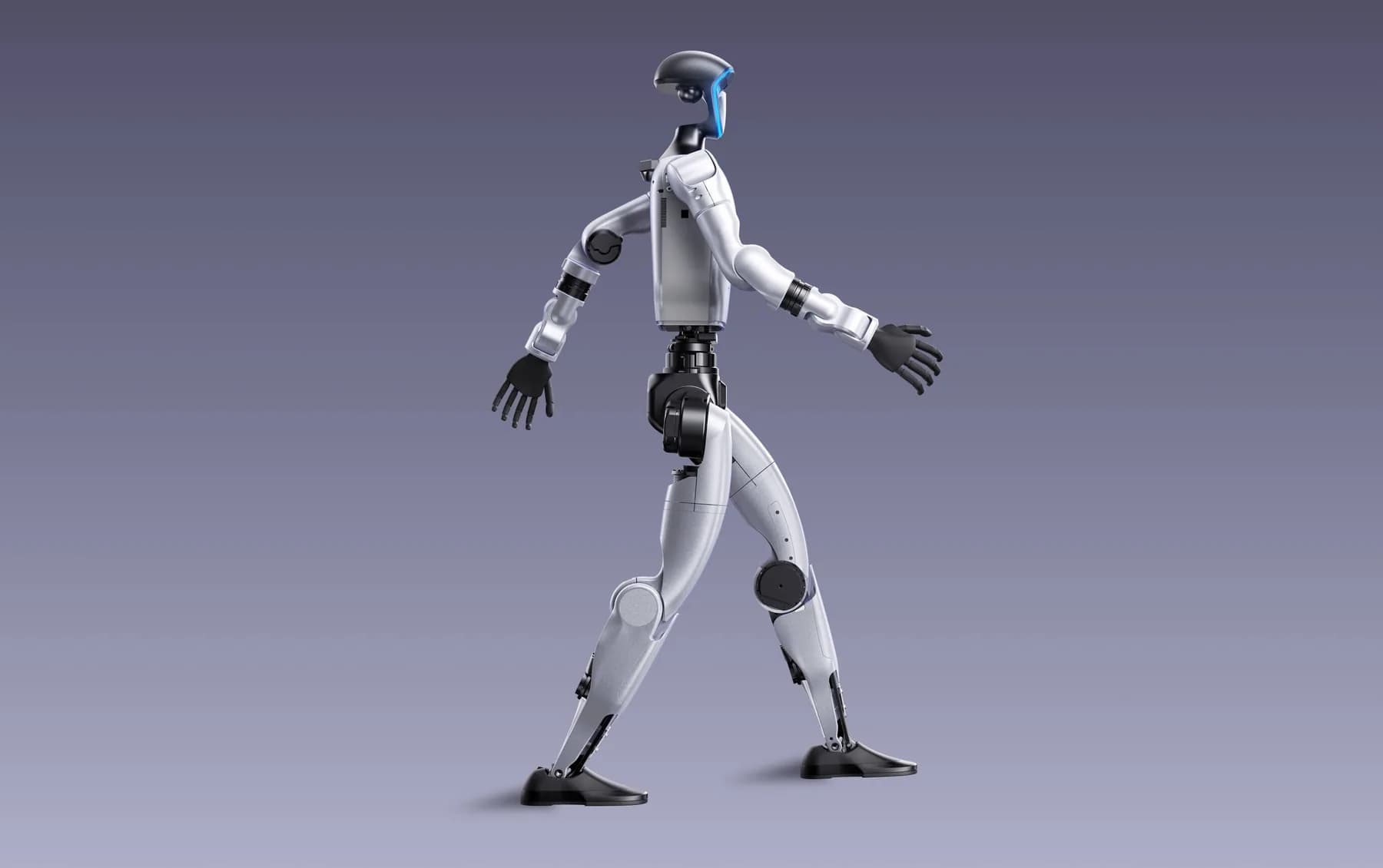
Unitree's second humanoid robot and first small-scale model, launched on May 13, 2024 and billed by the compan…
UBTech's next-generation large humanoid service robot, globally unveiled at WAIC 2021 in Shanghai on July 7, 2…